
Table of Contents
- What Are Ceramic Braces?
- How Do Ceramic Braces Work?
- Why Choose Ceramic Braces?
- Things to Know Before Getting Ceramic Braces
- Who Is the Right Candidate?
- Cost of Ceramic Braces
- Caring for Ceramic Braces
- What to Expect During Treatment
- Ceramic Braces vs Alternatives
- New Improvements in Ceramic Braces
- Myths About Ceramic Braces
- Tips for Getting the Best Results
- Life After Ceramic Braces
- FAQs About Ceramic Braces
- 1. How long do ceramic braces take?
- 2. Are they more expensive than metal braces?
- 3. Do ceramic braces stain?
- 4. Are they as effective as metal braces?
- 5. Do they hurt?
- 6. Can I play sports with them?
- 7. Can I eat normally?
- 8. Do they make teeth look bigger?
- 9. Are ceramic braces good for adults?
- 10. What happens after removal?
- Final Thoughts
A confident smile can change the way you feel about yourself and how others see you. For many people, crooked or misaligned teeth can hold back that confidence. Thankfully, modern orthodontics offers several solutions and one of the most popular among teens and adults is ceramic braces. They provide the proven results of traditional braces while being much less noticeable, making them ideal for anyone who wants to straighten their teeth discreetly.
What Are Ceramic Braces?
Ceramic braces are orthodontic devices designed to align your teeth using brackets and wires, just like traditional metal braces. The difference lies in their appearance; the brackets are made from a tooth-colored or clear ceramic material that blends naturally with your teeth. This makes them far less visible, helping you smile confidently even during treatment.
For people who want the effectiveness of braces without the metallic look, ceramic braces offer the perfect balance. They’re especially popular with adults and older teens who prefer a subtle treatment option.
How Do Ceramic Braces Work?
The way ceramic braces work is straightforward yet highly effective.
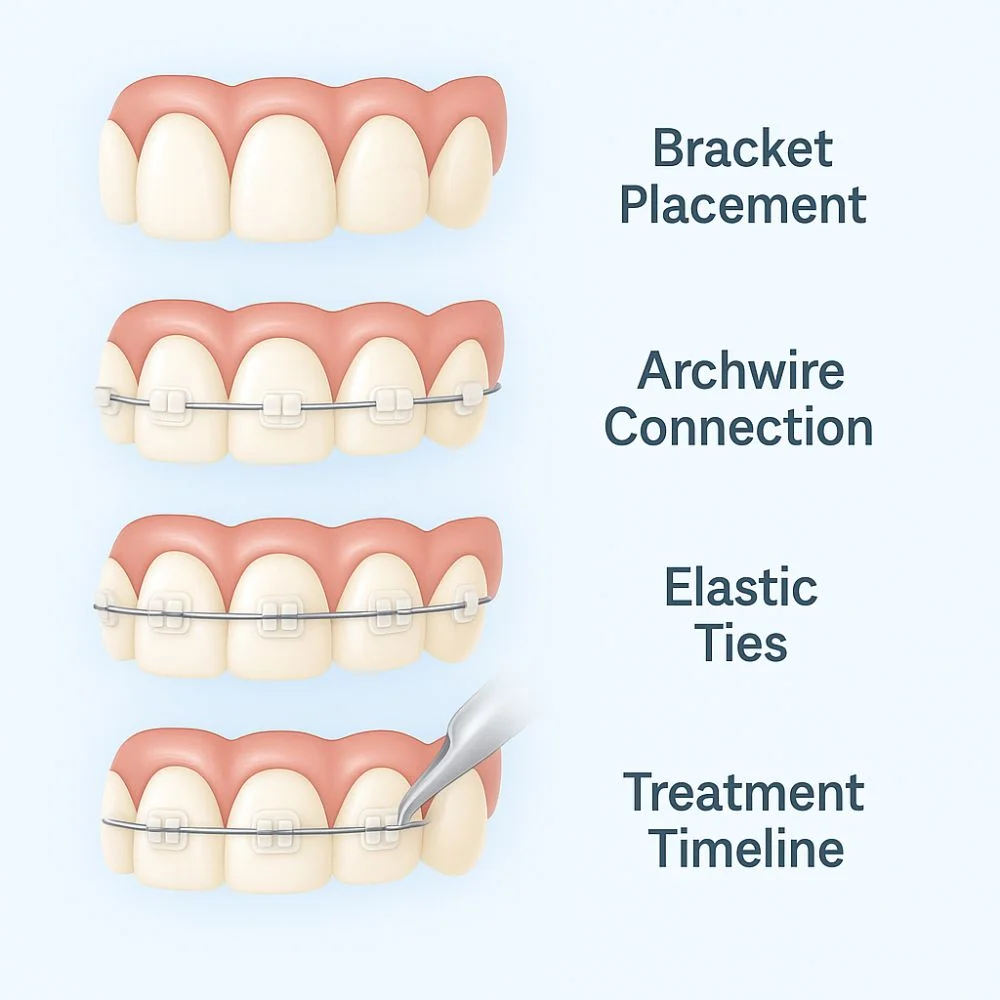
- Bracket placement: The orthodontist uses a safe adhesive to attach ceramic brackets to the front of each tooth.
- Archwire connection: A thin wire runs through the brackets, applying gentle, steady pressure to shift teeth into their ideal positions.
- Elastic ties: Clear or tooth-colored bands hold the wire in place and are changed regularly.
- Adjustments: Every 4–8 weeks, your orthodontist tightens or replaces the wire to maintain progress.
- Treatment timeline: Depending on your case, treatment usually lasts 18–36 months.
They can fix many dental issues, including crowding, spacing and bite problems like overbites, underbites and crossbites.
Why Choose Ceramic Braces?
People choose ceramic braces because they combine strong performance with an appealing look. Here are their key benefits:
- Less visible appearance: Clear or tooth-colored brackets blend in with your teeth, making them hard to spot.
- Effective treatment: They handle complex alignment issues that clear aligners may not fully correct.
- Comfortable wear: Smooth ceramic brackets are often gentler on cheeks and gums than metal ones.
- Confidence boost: You can correct your smile without worrying about a metallic appearance.
- Customization options: Some orthodontists offer fun, colorful elastic bands if you prefer a personalized touch.
For many, ceramic braces strike the right balance between visible results and a subtle look.
Things to Know Before Getting Ceramic Braces
While ceramic braces have many advantages, they’re not without downsides:
- Higher cost: They usually cost more than standard metal braces.
- Fragile brackets: Ceramic is less durable and more likely to chip or break.
- Staining risk: Elastic ties can stain if exposed to coffee, tea, red wine or dark-colored foods.
- Slightly larger brackets: Ceramic brackets are a bit bigger than metal ones, which might take some getting used to.
- Extra care required: Good oral hygiene is crucial to keep them looking clean and clear.
Knowing both the pros and cons helps you make the right decision for your smile.
Who Is the Right Candidate?
Ceramic braces work best for:
- Teens and adults seeking a less noticeable alternative to metal braces.
- People with mild to moderate crowding, gaps, or bite issues.
- Those willing to maintain excellent oral hygiene and attend regular appointments.
- Patients who prefer faster, more precise results than clear aligners can provide.
They may not be suitable for very young children or people who play contact sports regularly, as ceramic brackets can break more easily.
Cost of Ceramic Braces
The cost varies, but most ceramic braces range from $4,000 to $8,000, depending on:
- The complexity of your case
- Treatment duration
- Location and expertise of your orthodontist
- Additional appliances or procedures required
Even though they’re more expensive, many people find the comfort and discreet design worth the investment. Flexible payment plans and financing options can make treatment more manageable.
Caring for Ceramic Braces
Proper care keeps your ceramic braces clean and effective. Follow these tips:

- Brush after every meal: Use a soft-bristled toothbrush and fluoride toothpaste to remove food particles.
- Floss daily: A floss threader or water flosser helps clean between teeth and around brackets.
- Limit stain-causing foods and drinks: Reduce coffee, tea and foods with strong colors to keep elastic ties clear.
- Avoid hard or sticky snacks: Candy, nuts and gum can damage brackets and wires.
- Use mouthwash: Rinse regularly to maintain oral hygiene.
- Attend all scheduled visits: Adjustments are crucial to keeping treatment on track.
By maintaining good habits, you’ll prevent stains and damage, ensuring your braces work effectively.
What to Expect During Treatment
Here’s a step-by-step overview of the process:
- Initial consultation: Your orthodontist examines your teeth, takes X-rays, and discusses treatment options.
- Getting your braces: Ceramic brackets are attached, and the archwire is fitted. It’s normal to feel a bit of tenderness right after getting braces or during adjustments, but it fades quickly.
- Regular adjustments: Wires are tightened every few weeks to keep your teeth moving.
- Visible progress: As months pass, your teeth gradually shift into their ideal positions.
- Removal: Once alignment is complete, the braces are carefully removed, and your teeth are polished.
- Retention phase: Wearing a retainer keeps your new smile in place.
Ceramic Braces vs Alternatives
Here’s how ceramic braces compare to other treatments:
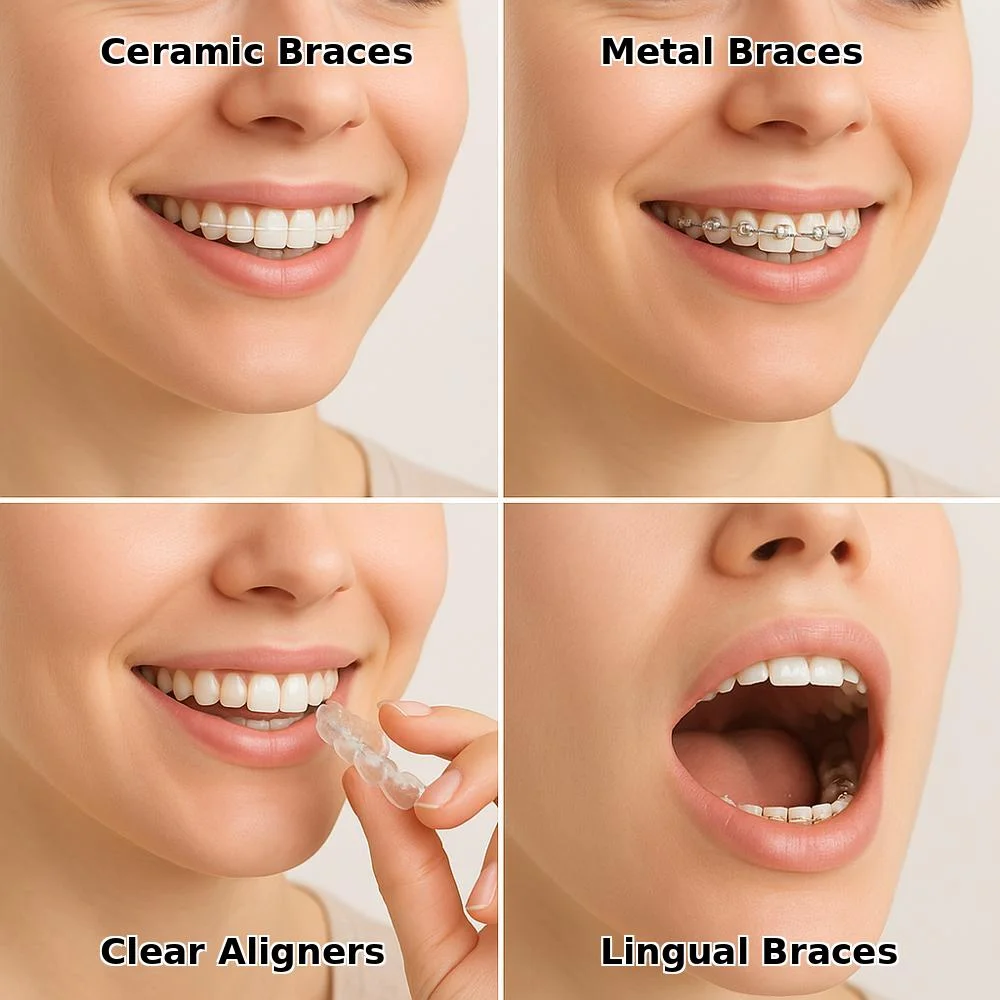
- Metal braces: More durable and budget-friendly, but they’re easy to see
- Clear aligners: Nearly invisible and removable but less effective for severe cases.
- Lingual braces: Hidden behind the teeth but more expensive and harder to clean.
Ceramic braces provide a balance of discreet appearance, comfort and the ability to correct more complex alignment issues.
New Improvements in Ceramic Braces
Modern ceramic braces are more advanced than ever, offering better comfort and performance. Modern ceramic braces feature improved brackets that are more durable, have a slimmer design, and match the shade of your teeth for a discreet look. Many uses improved materials that resist staining, so they stay clear throughout treatment.
Newer wires and bonding techniques also help move teeth more efficiently, sometimes shortening treatment times. These innovations mean patients can enjoy the benefits of braces with less discomfort and greater confidence.
Myths About Ceramic Braces
There are many misconceptions about ceramic braces that can confuse people. Here are a few common misconceptions about ceramic braces and the facts behind them:
- Myth: Ceramic braces stain quickly.
Truth: The ceramic brackets resist stains; only the elastic ties may discolor, and these are replaced regularly by your orthodontist. - Myth: They are not as strong as metal braces.
Truth: While ceramic brackets can chip if handled roughly, they are durable enough for everyday use and work effectively for most alignment issues. - Myth: Ceramic braces take longer to work.
Truth: Treatment time is usually the same as with metal braces, depending on your dental needs and how well you follow care instructions.
Understanding these facts helps you make a confident decision about your treatment.
Tips for Getting the Best Results
- Keep up with daily brushing and flossing.
- Avoid foods that can stain or damage brackets.
- Follow your orthodontist’s instructions carefully.
- Wear a mouthguard during sports activities.
- Stay patient, your beautiful smile is worth the wait.
Life After Ceramic Braces
Completing treatment with ceramic braces is an exciting milestone, but keeping your new smile beautiful requires some care:
- Wearing your retainer: After braces come off, your orthodontist will give you a retainer to keep teeth in their new positions.
- Maintaining good oral hygiene: Continue brushing and flossing daily to protect your straight teeth.
- Regular dental check-ups: Routine visits help ensure your teeth and gums stay healthy.
- Enjoying your confidence: With your teeth aligned, you’ll notice an improvement not only in your smile but also in your self-esteem and overall oral health.
Taking these steps will help you enjoy your new smile for life.
FAQs About Ceramic Braces
1. How long do ceramic braces take?
Typically, 18–36 months, depending on your case.
2. Are they more expensive than metal braces?
Yes, but many prefer their discreet and comfortable design.
3. Do ceramic braces stain?
The brackets resist stains, but elastic ties can discolor. Good oral care helps.
4. Are they as effective as metal braces?
Yes, they correct most misalignments and bite issues.
5. Do they hurt?
Mild discomfort after adjustments is normal and usually fades in days.
6. Can I play sports with them?
If you’re active in sports, using a protective mouthguard helps keep your teeth and braces safe from impact.
7. Can I eat normally?
Stay away from very hard, sticky or crunchy foods that could harm your braces.
8. Do they make teeth look bigger?
No, the brackets blend with your teeth and are barely noticeable.
9. Are ceramic braces good for adults?
Yes, many adults choose them for discreet and effective treatment.
10. What happens after removal?
After your braces are removed, a retainer is needed to hold your teeth in place and preserve your new smile.
Final Thoughts
Ceramic braces give the proven results of traditional braces while offering a more natural, low-profile look. They’re an excellent choice for people who want straighter teeth without the metallic appearance of metal braces. With consistent care and regular orthodontic check-ups, ceramic braces can give you a straight, healthy smile you’ll love to show off.