

Table of Contents
- What Is Paroxysmal Nocturnal Dyspnea (PND)?
- How It Differs from General Shortness of Breath
- Causes of Paroxysmal Nocturnal Dyspnea
- Conditions Commonly Linked with PND
- Signs and Symptoms to Watch For
- How Paroxysmal Nocturnal Dyspnea Is Diagnosed
- Treatment Options for PND
- Difference Between Orthopnea and Paroxysmal Nocturnal Dyspnea
- When Should You See a Doctor?
- FAQs
- Conclusion
If you’ve ever woken up in the middle of the night gasping for air, you might have experienced a condition called Paroxysmal Nocturnal Dyspnea (PND). It’s a scary and uncomfortable experience that often points to an underlying health issue.
What Is Paroxysmal Nocturnal Dyspnea (PND)?
1. Definition in Simple Words
Paroxysmal Nocturnal Dyspnea is a condition where a person suddenly wakes up during the night feeling short of breath. It’s not just regular snoring or difficulty breathing while lying flat; it’s an intense, unexpected shortness of breath that can be frightening.
The term breaks down like this:
- Paroxysmal means sudden and severe
- Nocturnal means it happens at night
- Dyspnea means difficulty breathing
How It Differs from General Shortness of Breath
While general dyspnea can happen any time during the day, PND occurs specifically at night, usually a few hours after sleeping. Unlike shortness of breath after exercise or due to asthma, PND often has deeper connections to heart or lung issues.
1. Common Symptoms During Sleep
- Waking up gasping or choking
- Needing to sit or stand to breathe
- Rapid heartbeat
- Chest tightness or discomfort
- Coughing or wheezing
Causes of Paroxysmal Nocturnal Dyspnea
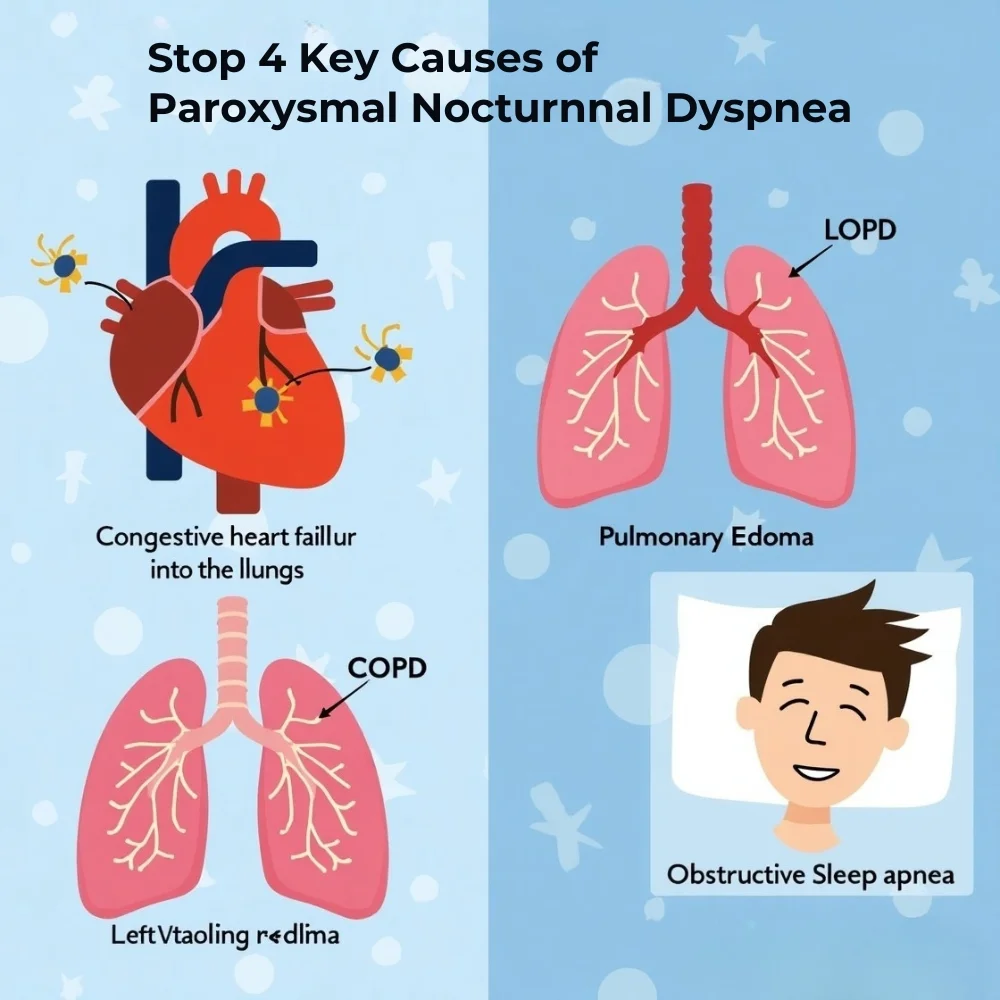
Paroxysmal Nocturnal Dyspnea (PND) is not a disease by itself. Instead, it is a warning sign that something more serious is going on inside the body, often involving the heart or lungs. When these organs don’t function properly, they can affect how you breathe, especially when lying down during sleep.
1. Heart-Related Conditions
One of the main causes of PND is congestive heart failure, particularly left-sided heart failure.
Here’s how it works:
- The left side of your heart is responsible for pumping oxygen-rich blood from the lungs to the rest of the body.
- If the heart is weak or damaged, it can’t pump efficiently.
- As a result, blood backs up into the lungs, causing fluid to collect in the air spaces of the lungs.
- This fluid makes it hard to breathe, especially when you’re lying flat, because gravity allows more fluid to shift into the lungs.
Common causes of left-sided heart failure: high blood pressure, coronary artery disease, and past heart attacks.
2. Lung-Related Issues
Problems with the lungs can also contribute to PND. One major example is chronic obstructive pulmonary disease (COPD), which includes emphysema and chronic bronchitis.
In these conditions:
- The lungs become inflamed or damaged.
- Airways are narrowed, and air gets trapped inside the lungs.
- This reduces oxygen levels and makes breathing harder, especially at night when your body is in a relaxed state.
Even without heart problems, poor lung function alone can cause breathing disturbances during sleep.
3. Fluid Buildup in Lungs
Another major cause is pulmonary edema, which simply means fluid in the lungs. It can happen because of:
- Heart failure
- Kidney problems
- Severe infections
- High blood pressure
When too much fluid leaks into the tiny air sacs of the lungs (alveoli), your lungs can’t exchange oxygen properly. Lying flat makes it worse because fluid spreads more evenly across the lungs, making breathing feel restricted and shallow.
4. Sleep Apnea as a Contributing Factor
Obstructive sleep apnea (OSA) is a sleep disorder where breathing repeatedly stops and starts during sleep due to blocked airways.
How does it link to PND?
- In sleep apnea, the airway muscles collapse or get blocked, especially when lying flat.
- This causes interrupted breathing, which can mimic or worsen PND symptoms.
- People with both sleep apnea and heart failure are at higher risk of experiencing nighttime breathlessness.
💤 Sleep apnea doesn’t always cause PND, but in people who already have heart or lung issues, it can make breathing problems worse at night.
Conditions Commonly Linked with PND
- Left-sided heart failure
- Pulmonary edema
- Asthma and COPD
- Obesity-related breathing problems
- Hypertension
- Coronary artery disease
Signs and Symptoms to Watch For
If you notice any of the following, you might be dealing with PND:
- Waking up suddenly with shortness of breath
- Nighttime coughing or wheezing
- Feeling panicked or restless during episodes
- Needing extra pillows to breathe comfortably
- Sweating or increased heart rate
Tip: PND symptoms usually appear 1–2 hours after falling asleep and are relieved by sitting or standing upright.
How Paroxysmal Nocturnal Dyspnea Is Diagnosed
Doctors look for the root cause of your breathing problems by combining your medical history with various tests.
1. Common Diagnostic Methods
- Patient History & Physical Examination: The first step involves understanding when and how symptoms appear.
- ECG and Echocardiogram: Helps detect heart failure or other heart-related issues.
- Chest X-Rays: Check for fluid in the lungs or an enlarged heart.
- Pulmonary Function Tests: Used if asthma or COPD is suspected.
- Sleep Studies (Polysomnography): Conducted when sleep apnea is a possible cause.
Treatment Options for PND
Since PND is usually a symptom of another health issue, treatment focuses on managing that underlying cause.
1. Common Treatments
- Medications for heart failure (e.g., ACE inhibitors, beta-blockers)
- Diuretics to reduce fluid retention
- Oxygen therapy during sleep
- CPAP machine for sleep apnea
- Lifestyle adjustments
2. Lifestyle Tips to Reduce Nighttime Symptoms
Here are some simple changes that can help ease PND episodes:
- Sleep with your head elevated using multiple pillows or an adjustable bed
- Reduce salt intake to prevent fluid buildup
- Exercise regularly to strengthen heart and lung function
- Maintain a healthy weight
- Take your medications as prescribed
- Avoid alcohol and tobacco
Difference Between Orthopnea and Paroxysmal Nocturnal Dyspnea
|
Feature |
Orthopnea |
Paroxysmal Nocturnal Dyspnea |
|
Timing |
Immediately after lying down | 1–2 hours after sleeping |
|
Relief |
Sitting upright | Sitting or standing up |
|
Common Cause |
Heart failure |
Heart failure, fluid buildup |
| Severity | Less intense |
More intense and frightening |
| Waking from Sleep? | No |
Yes |
When Should You See a Doctor?
You shouldn’t ignore PND. It often signals a serious underlying issue that needs medical attention.
Seek Medical Help If:
- Episodes become more frequent or severe
- You experience daytime shortness of breath
- You have a history of heart or lung disease
- You notice swelling in your legs or ankles
- New symptoms appear suddenly
FAQs
1. Is PND life-threatening?
Yes, it can be. While not immediately fatal on its own, PND is usually a sign of heart failure or lung disease, which can become life-threatening if untreated.
2. Can PND be a sign of heart failure?
Absolutely. Left-sided heart failure is one of the most common causes of PND. The heart’s inability to pump efficiently leads to fluid backing up in the lungs.
3. How is PND different from sleep apnea?
While both can cause nighttime breathing issues, PND is related to fluid buildup and heart function, whereas sleep apnea is due to airway blockage.
4. Can lifestyle changes completely cure PND?
Lifestyle changes can significantly reduce symptoms and improve quality of life, but treating the underlying condition is key to full recovery.
Conclusion
Paroxysmal Nocturnal Dyspnea is more than just a bad night’s sleep. It’s a clear sign that your heart or lungs might need help. Early detection, the right medical care, and simple lifestyle changes can make a huge difference. Don’t ignore the signals your body is sending, especially when they wake you in the middle of the night.