
Table of Contents
- Malcolm X’s Early Life and Family Roots
- Malcolm’s School Years and Early Disillusionment
- Malcolm X’s Early Struggles and Transformation
- A Unique Love Story Within the Nation of Islam
- Building his public voice
- Pilgrimage to Mecca and ideological shift
- The autobiography: creation and impact
- The Purpose Behind the Book
- Global Impact: More Than Just a U.S. Story
- The Role of Alex Haley: Giving the Story Structure
- Controversies and reinterpretations
- Lasting Influence on Culture and Media
- Conclusion
Malcolm X’s Early Life and Family Roots
Malcolm Little was born on May 19, 1925, in Omaha, Nebraska. He was the fourth of seven children. His mother, Louise Little, was originally from Grenada, and his father, Earl Little, was from Georgia. Earl was a Baptist lay speaker and a strong supporter of Pan-African leader Marcus Garvey. He led a local chapter of the Universal Negro Improvement Association (UNIA), while Louise worked as the group’s secretary and sent updates to Negro World. Together, they taught their children self-reliance and pride in being Black.
1. Racist Threats and the Family’s Struggles
Due to threats from the Ku Klux Klan, Earl’s activism with the UNIA led the family to leave Omaha in 1926. They moved first to Milwaukee and later to Lansing, Michigan. In Lansing, they faced constant harassment from a white supremacist group called the Black Legion. In 1929, their home was burned down, and Earl accused the Black Legion of setting the fire.
2. The Death of Earl Little
When Malcolm was just six years old, his father died in what officials claimed was a streetcar accident. However, his mother claimed that the Black Legion had murdered Earl. This tragedy deeply affected Malcolm, and he later spoke of his mixed feelings and confusion about how his father died.
3. A Family Breakdown and Foster Care
In 1937, Louise became pregnant by a man she had been dating, but he left when he learned of the pregnancy. By late 1938, she suffered a mental breakdown and was sent to Kalamazoo State Hospital. Her children were separated and placed in foster care. Malcolm and his siblings worked for years to free her, and she was finally released 24 years later.
Malcolm’s School Years and Early Disillusionment
Malcolm went to West Junior High in Lansing and later to Mason High School in Michigan. He performed well in junior high and showed strong academic potential. However, in 1941, a white teacher discouraged him from pursuing his dream of becoming a lawyer, saying it wasn’t a realistic goal for a Black student. That comment shattered his ambition and made him feel like the white world had no place for a talented Black youth.
Avoiding the Draft and Embracing Crime
In late 1943, Malcolm was summoned for military service during World War II. To avoid the draft, he acted mentally unstable, making wild and aggressive statements. As a result, the draft board declared him mentally unfit for service. By late 1945, he had returned to Boston and formed a burglary crew. They targeted wealthy white homes, stealing valuable items during nighttime break-ins. Malcolm used his street smarts and charm to immerse himself further in criminal activities and navigate the dangerous life he had embraced.
Arrest, Conviction, and Prison Time
In early 1946, Malcolm was arrested while trying to retrieve a stolen watch from a repair shop. He was charged with burglary and breaking and entering. That February, he began serving an eight to ten-year sentence at Charlestown State Prison in Massachusetts. In 1947, he was transferred to Concord Reformatory, where he served for over a year before being moved to Norfolk Prison Colony. This time in prison would become a major turning point in his life, setting the stage for his powerful transformation into one of the most influential voices of the 20th century.
Malcolm X’s Early Struggles and Transformation
In 1946, he was sentenced to eight to ten years in prison for burglary and theft. While serving his time, he joined the Nation of Islam and changed his name to Malcolm X, rejecting his birth name “Little,” which he called a name given by slave owners.
The Birth of Malcolm X
In 1950, Malcolm wrote a letter to President Truman from prison, criticizing the Korean War and declaring himself a communist. This led the FBI to begin a file on him. That same year, he started calling himself Malcolm X. Elijah Muhammad taught that followers should drop their last names given by slave owners and use “X” until they were given their true Muslim name. In his autobiography, Malcolm stated that he used “X” to represent the lost African surname he could never discover. He rejected “Little” as the name of a white slavemaster, choosing instead an identity rooted in pride, resistance, and truth.
A Unique Love Story Within the Nation of Islam
Betty Sanders met Malcolm X for the first time in 1955 after attending one of his lectures, and they saw each other again at a dinner gathering. She became a regular at his talks and soon felt drawn to the Nation of Islam. In 1956, she became a member of the Nation of Islam and chose the name Betty X. The Nation’s teachings didn’t allow one-on-one dating, so the couple courted in group settings. Malcolm often invited her on outings to museums and libraries with others, allowing their bond to grow in line with their faith.
Marriage and a Growing Family
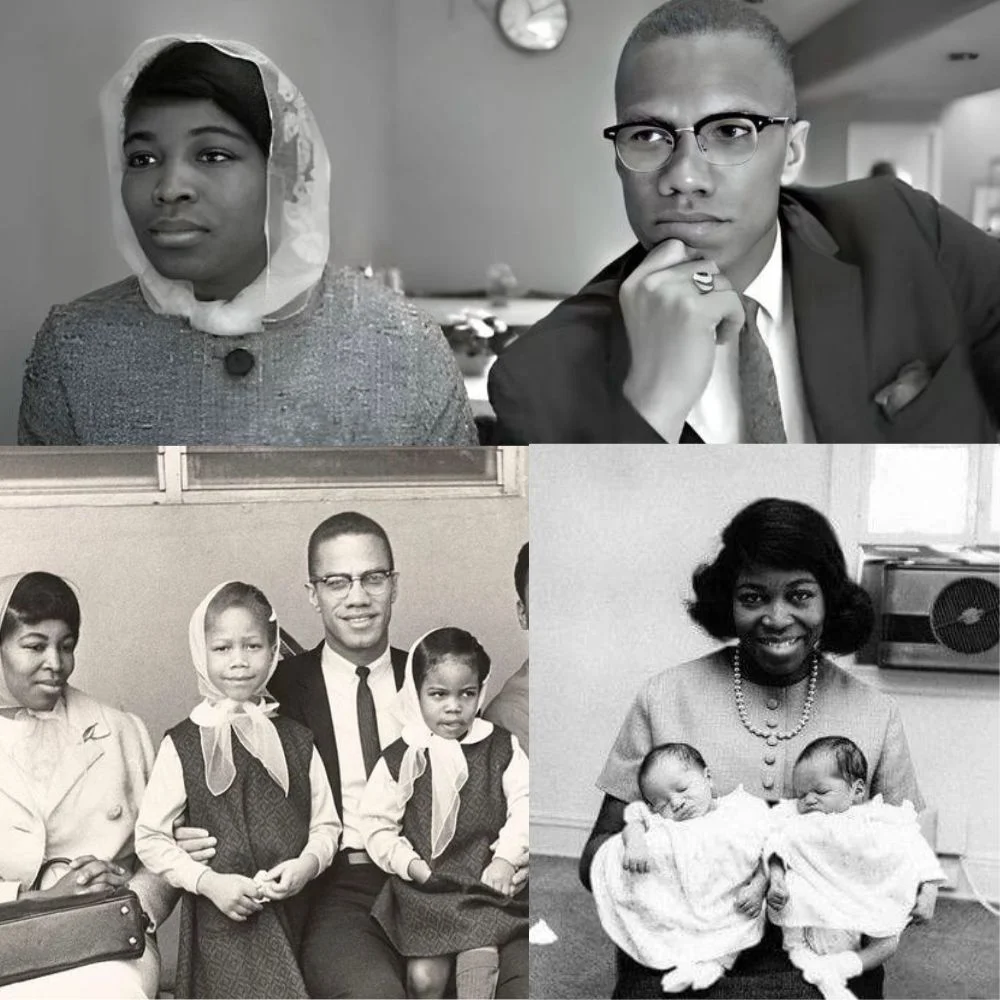
In January 1958, Malcolm X phoned Betty from Detroit to propose, and they married two days afterward. Together, they had six daughters. Their first child, Attallah, was born in 1958; her name means “gift of God” in Arabic. In 1960, they gave their second daughter the name Qubilah, inspired by Kublai Khan. Then came Ilyasah in 1962, named in honor of Elijah Muhammad. Gamilah Lumumba was born in 1964, her name inspired by African leaders Gamal Abdel Nasser and Patrice Lumumba. After Malcolm’s assassination in 1965, Betty gave birth to twin daughters, Malikah and Malaak, named in his memory.
Building his public voice
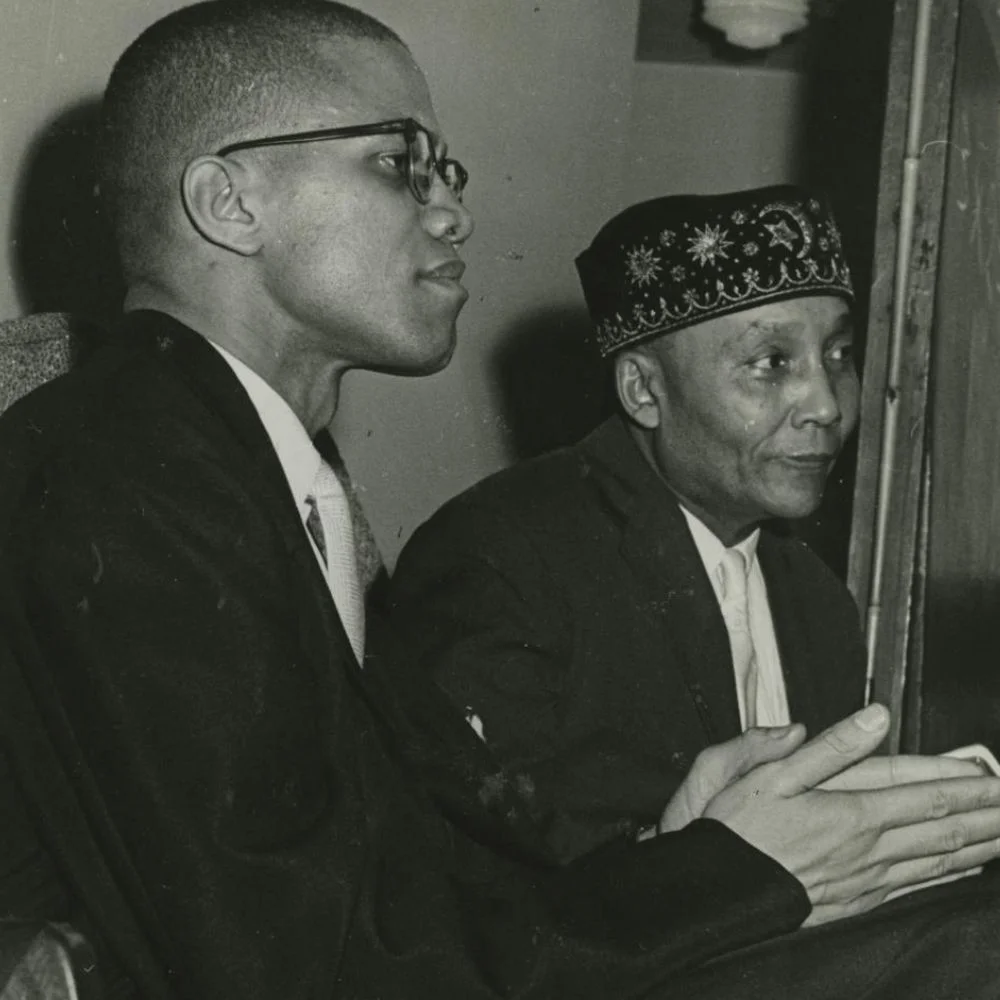
As Malcolm spoke up, newspapers and TV covered him often sensationalizing him. He understood media and used photographs and visuals to shape a new, dignified image of Black life within Nation of Islam communities. His speeches spread across the U.S. and abroad.
But over time he disagreed with Nation leader Elijah Muhammad. He sensed corruption, hypocrisy. In 1964, he left and established Muslim Mosque, Inc., and later created the Organization of Afro-American Unity (OAAU) to promote Pan-African solidarity and human rights for people of African descent.
Pilgrimage to Mecca and ideological shift
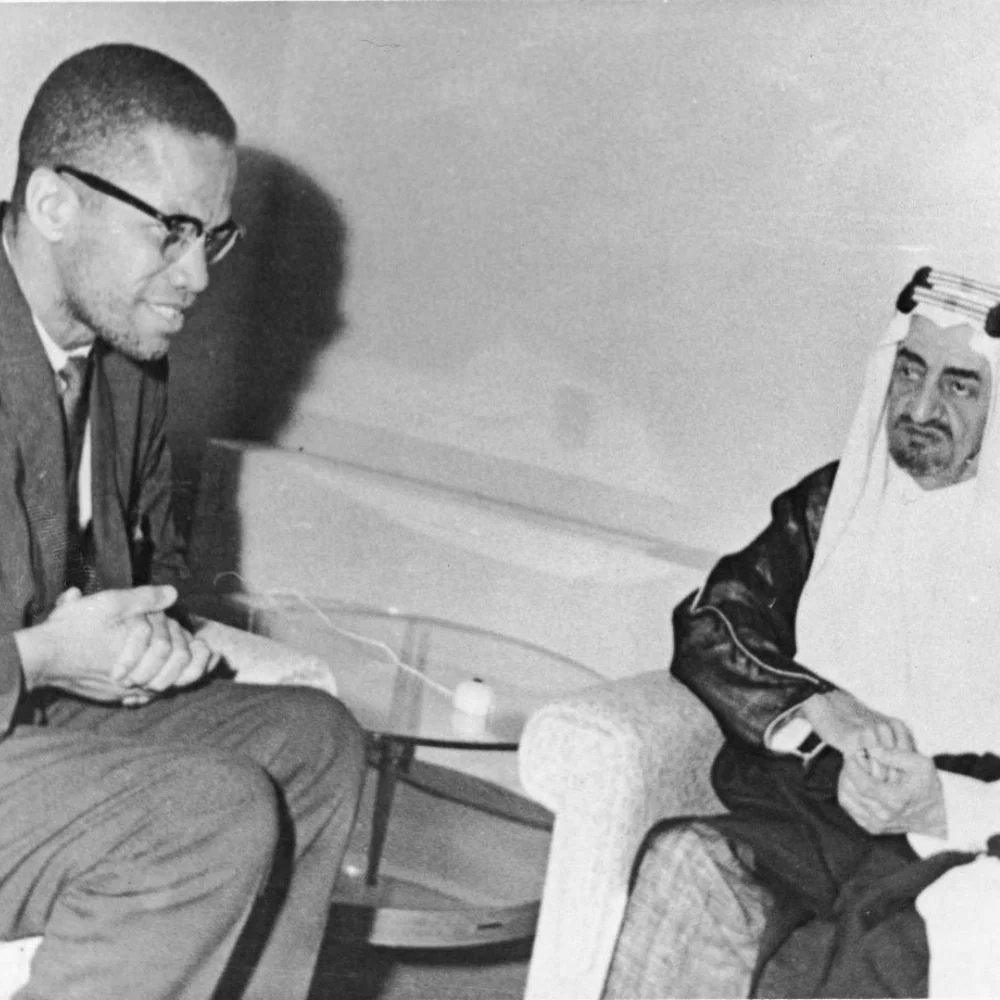
In 1964, Malcolm performed the pilgrimage (Hajj) to Mecca. There he saw Muslims of all races worshiping together. That experience deeply changed him. He embraced orthodox Sunni Islam and moved away from strict racial separatism toward universal human rights, human dignity, and global unity. By the end of his life, he spoke of global revolution, human rights, and solidarity across borders.
The autobiography: creation and impact
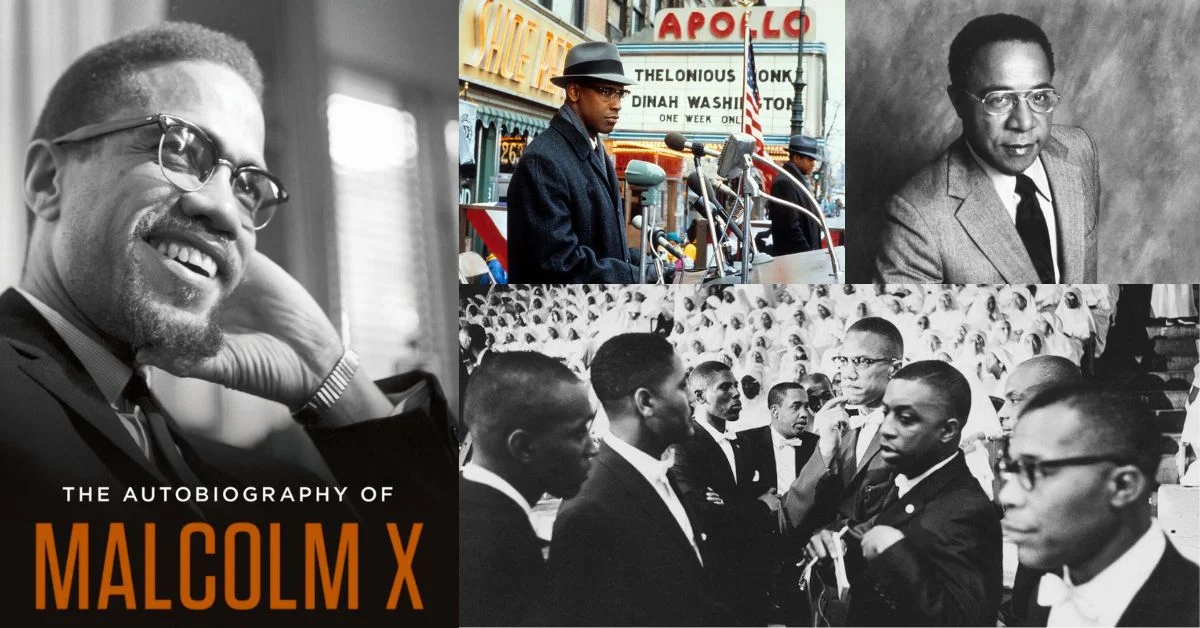
From 1963 until his death in early 1965, Malcolm made about 50 interviews with journalist Alex Haley, telling his life in his own words. Haley wrote and organized the book, working closely with Malcolm. After Malcolm’s assassination on 21 February 1965, Haley completed and published the book
I wrote the memoir in plain language, using a first-person perspective. Malcolm spoke directly, honestly, including about violence, drugs, self‑hate, prison and hope. He used everyday words, slang, and emotional clarity. Haley’s own literary skill helped shape a compelling narrative that felt personal and urgent.
The Purpose Behind the Book
Before the book, many saw Malcolm X as a violent separatist. But the autobiography revealed his life story the pain, growth, and change. It shifted public perception; he became seen as a complex, evolving, determined man rather than a radical caricature
TIME magazine later called the autobiography one of the ten most influential nonfiction books of the 20th century, citing its haunting tale of persecution and rebirth known to influence readers worldwide
By 1977 the book had sold six million copies; it continues to sell steadily today .
Global Impact: More Than Just a U.S. Story
1. How the Book Resonated Internationally?
Although rooted in the American civil rights struggle, Malcolm X’s story found audiences far beyond the U.S. From South Africa to the UK to the Middle East, people saw in him a figure who spoke to broader themes of colonization, identity, and resistance.
In the decades following its publication, the autobiography was translated into multiple languages. It became a fixture in classrooms, reading circles, and revolutionary movements across the world.
For example:
- In Africa, anti-colonial leaders cited Malcolm X as an inspiration for asserting self-determination.
- In Latin America, political activists referenced his speeches to highlight U.S. imperialism and racial injustice.
- In Europe, immigrant youth saw reflections of their own struggles in his experiences.
2. Why It Still Matters Today?
Even now, over 50 years later, The Autobiography of Malcolm X remains shockingly relevant. With ongoing conversations about police brutality, systemic racism, and identity politics, Malcolm’s words still hit hard. His evolution from angry outsider to global humanist offers a powerful framework for personal and political change.
3. Themes and literary strengths
The book explores core themes in plain terms:
- Identity: He transformed his identity from Malcolm Little to Malcolm X, and finally to El-Hajj Malik El-Shabazz
- Racism: systemic injustice, segregation, personal trauma.
- Redemption: prison to religion to activism.
- Spirit of change: admitting mistakes, evolving beliefs.
- Pan‑Africanism: global Black unity and solidarity.
Its narrative is straightforward yet dramatic. Readers feel exhausted by adversity yet inspired by renewal. The voice is often active, vivid and engaging. It was meant to be heard, not just read like Malcolm speaking face‑to‑face .
The Role of Alex Haley: Giving the Story Structure
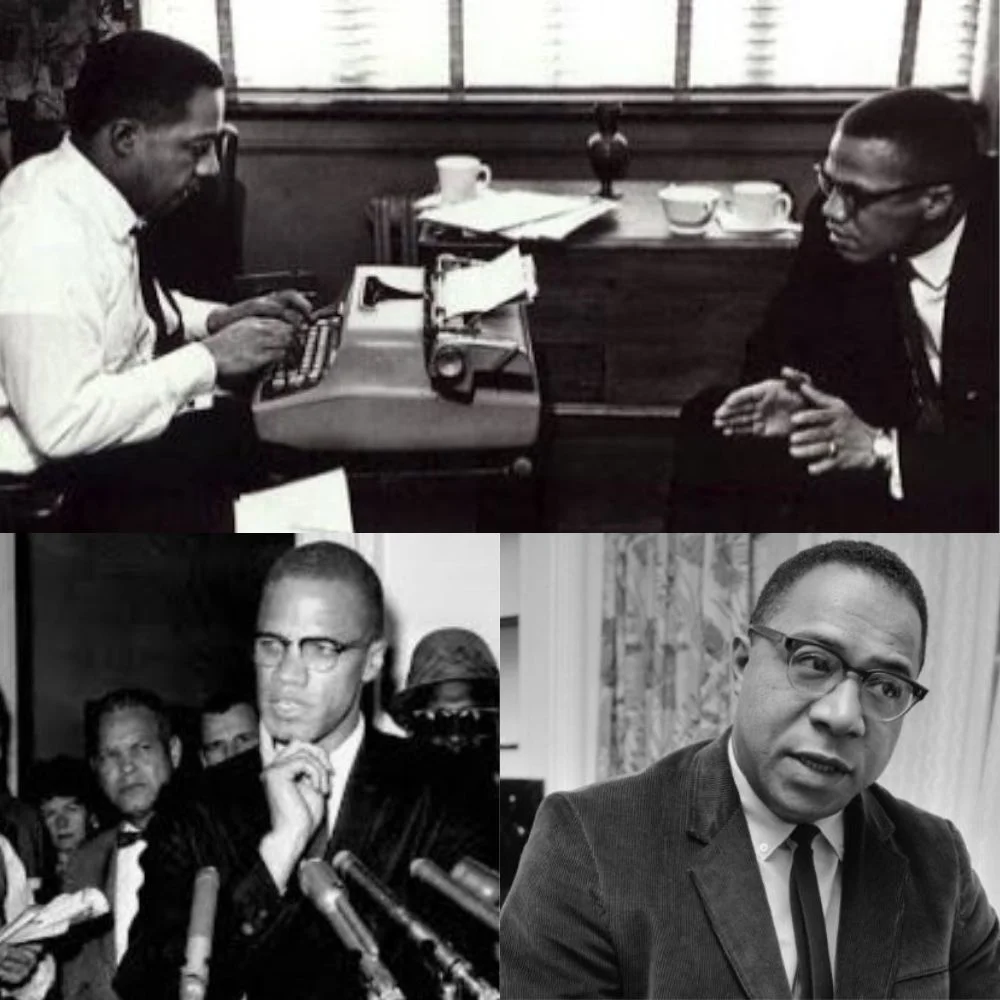
Malcolm X spoke with passion, and Alex Haley shaped the story’s structure. Haley’s role was critical in ensuring the story flowed clearly and powerfully, especially since Malcolm’s life was so dynamic and complex.
Haley helped shape the book into something digestible for a wide audience without watering down Malcolm’s truth. His journalistic skills added polish without losing the raw edge that defined Malcolm’s personality. They established a benchmark for future memoirs, especially in communities where voices frequently face marginalization or silence.
Controversies and reinterpretations
The autobiography is not without critics. Scholars note that Haley shaped parts of the narrative; some argue it includes myth‑making and self‑fashioning. Malcolm and Haley privileged certain events and downplayed others, raising questions about truth, memory, and storytelling .
Biographer Manning Marable emphasized that Malcolm was self‑reinventing. The autobiography let us see him as flawed, evolving, and intent on redemption not a perfect saint but a demanding mirror to society .
Lasting Influence on Culture and Media
Since its release, The Autobiography of Malcolm X has influenced movies, music, art, and literature. From Spike Lee’s 1992 film “Malcolm X” to hip-hop artists referencing his speeches, his words continue to echo in pop culture.
Many writers have drawn from Malcolm’s story to talk about injustice, freedom, and identity. The book also helped shape the style of writing known as Black autobiographical literature. Its direct and raw voice made it different from other books of its time.
Even readers from outside the Black community found truth and meaning in his journey. His clear way of speaking made people listen, even if they didn’t agree with everything. That’s part of what makes the book so lasting.
1. The Book as a Tool for Activism
The autobiography continues to act as a tool for activists and organizers. It helps people understand how systems of racism and injustice work. It also teaches readers how to build strength, unity and action.
Many activists today read Malcolm X to understand how to stay firm in their beliefs. His journey shows that change is possible through knowledge, courage, and honesty. His words offer both warning and guidance. It also serves as a reminder that true leadership comes from experience, self-reflection, and deep care for your community. That’s why people still pass the book around like a torch, it lights the path forward.
2. A Book for Every Generation
The Autobiography of Malcolm X speaks to readers in every generation. It has been more than 50 years since it was published, but its words still hit hard.
Teenagers, college students, workers, and leaders all find lessons in Malcolm’s life. His story is timeless because it talks about real human struggles and triumphs. It’s not just history, it’s a guide for how to deal with today’s issues. That’s why the book remains on reading lists and in bookstores around the world.
Conclusion
The Autobiography of Malcolm X is more than a book. It’s a journey, a message, and a legacy. It shows us how one man overcame a broken past, admitted errors, changed beliefs, and reached for global justice. It teaches that identity is flexible, courage means evolving and impact comes from telling truth even hard truth. Through his own words, Malcolm X changed how the world saw him and how it understood the fight for justice. His honesty, power, and passion made the book a lasting piece of history. It helped turn him from a misunderstood figure into a global icon.
In every paragraph Malcolm speaks to millions not just about America, but about humanity, respect, self‑worth and the power of change. That is why this one book stands at the heart of his lasting global legacy.