
Table of Contents
- What Is Quantum-Proof Encryption?
- How does It Differ from Traditional Encryption?
- Why Quantum Computers Threaten Current Security Models
- Why You Should Care About Quantum Security Now?
- Key Benefits of Quantum-Resistant Encryption
- How Quantum-Proof Encryption Works?
- Role of NIST and International Efforts
- Steps to Secure Your Digital Assets Today
- Common Myths About Quantum Encryption
- What to Look for in a Quantum-Resistant Security Provider?
- Conclusion
In today’s digital world, keeping your data safe is more important than ever. With the rise of quantum computing, traditional encryption methods may soon become outdated. That’s where quantum-proof encryption steps in. This advanced method of securing information helps you stay protected against future cyber threats, even those from super-powerful quantum machines.
What Is Quantum-Proof Encryption?
Quantum-proof encryption, also called post-quantum cryptography (PQC), is a type of security system designed to protect data from being hacked by quantum computers. These are not your regular machines. Quantum computers have the potential to solve problems much faster than current systems, making today’s encryption easy for them to break. Quantum-proof encryption uses new mathematical methods that even quantum computers can’t crack, at least not easily.
How does It Differ from Traditional Encryption?
Traditional encryption methods, like RSA and ECC, rely on complex math problems such as factoring large numbers or solving elliptic curves. These methods are strong against normal computers but not against quantum machines. Quantum-proof encryption uses different mathematical structures that can resist attacks from both classical and quantum computers, making them more secure for the future.
Why Quantum Computers Threaten Current Security Models
Quantum computers use a different type of processing that allows them to perform multiple calculations at once. This power can break current encryption standards in a matter of seconds. Once these machines become mainstream, any data protected with today’s encryption could be exposed. That includes emails, banking records, medical files, and much more. So, preparing now isn’t just wise, it’s necessary.
Why You Should Care About Quantum Security Now?
It may seem like quantum computing is years away, but technology moves quickly. By the time it becomes widely available, it may already be too late to protect existing data. That’s why quantum-proof encryption matters today. It offers a chance to secure your online assets before potential threats arrive.
1. Future-Proofing Digital Assets
Data stored today may need to stay private for years or even decades. Think about financial records, medical histories, legal contracts, and intellectual property. If these are exposed years later due to weak encryption, the damage could be huge. Quantum-proof encryption helps ensure that sensitive data stays protected over the long term.
2. Industries Most at Risk (Finance, Healthcare, Legal, etc.)
Some industries face a higher risk from quantum attacks, including:
- Finance: Banks store financial data, payment details, and client information.
- Healthcare: Medical histories and patient records must remain confidential.
- Legal: Law firms hold sensitive contracts and client documents.
- Government: National security data must be secured for decades.
Any industry that relies on long-term privacy or secure communication needs to start thinking about quantum security now.
Key Benefits of Quantum-Resistant Encryption
Switching to quantum-resistant encryption brings several important advantages:
- Enhanced protection against quantum decryption: Makes it hard for even quantum systems to access your data.
- Longer data confidentiality lifespan: Keeps sensitive files protected for the future.
- Greater trust for users and customers: Shows you are serious about long-term data security.
How Quantum-Proof Encryption Works?
Quantum-proof encryption is built using new types of cryptographic algorithms that are tough for quantum computers to crack.
1. Introduction to Post-Quantum Cryptography (PQC)
PQC is a group of encryption tools designed to resist both classical and quantum attacks. These tools are being tested and developed to become the next standard for online security. The goal is to create a digital wall that quantum machines can’t easily break.
2. Algorithms Being Developed (Lattice-Based, Hash-Based, etc.)
Experts are working on several strong encryption models, including:
- Lattice-based cryptography: Uses complex geometric problems.
- Hash-based signatures: Built from secure hash functions.
- Multivariate polynomial equations: Solving these equations is hard, even for quantum machines.
These are just a few of the methods researchers are exploring to ensure strong, lasting protection.
Role of NIST and International Efforts
The National Institute of Standards and Technology (NIST) is leading the effort to choose the best post-quantum algorithms. They’re working with global researchers to test, compare, and standardize these methods. Once finalized, these standards will guide governments and businesses in adopting quantum-resistant technologies.
Steps to Secure Your Digital Assets Today
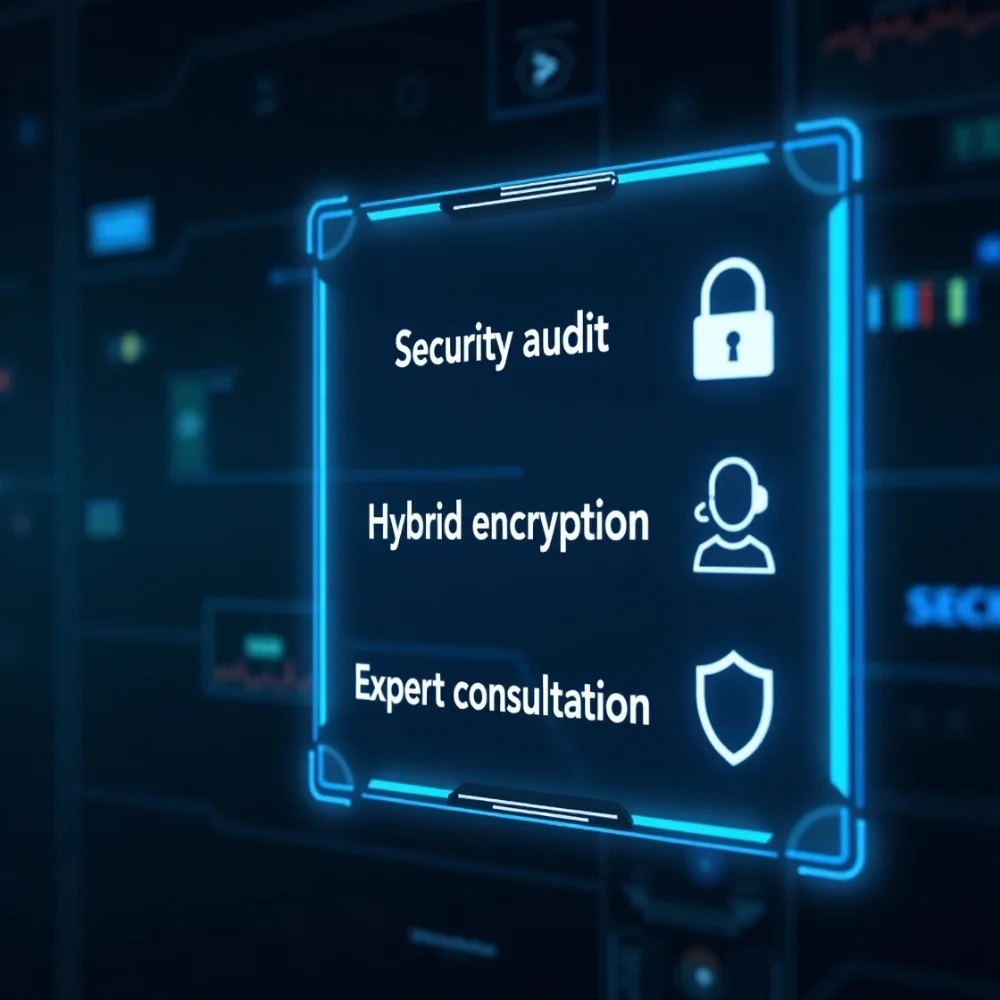
You don’t need to wait for the future to start protecting your data. Here are some smart steps you can take now:
1. Assess Current Encryption Methods
Review the encryption systems you currently use. Are they still strong? Do they rely on RSA or ECC? Understanding your present setup is the first step toward preparing for what’s next.
2. Start Integrating Hybrid Crypto Systems
Hybrid systems use both traditional and quantum-proof encryption. This makes them stronger and prepares your data for the transition to full post-quantum security. Many security providers now offer hybrid models as a starting point.
3. Consult with Cybersecurity Experts
Speak to professionals who specialize in encryption and data protection. They can help assess your risks, suggest reliable solutions, and guide you through the upgrade process. Don’t wait until a threat becomes real; act early and wisely.
Common Myths About Quantum Encryption
There’s a lot of confusion around quantum-proof encryption. Let’s clear up some of the most common myths:
- It’s too early to worry: Actually, now is the right time to start preparing.
- Only big companies need it: Small businesses and individuals are also targets of data theft.
- It’s the same as quantum computing: No, quantum-proof encryption is about protecting data from quantum computers, it’s not building them.
What to Look for in a Quantum-Resistant Security Provider?
Choosing the right provider is key. Look for:
- Experience with PQC integration: They should already be working with post-quantum tools.
- Transparent encryption policies: You should understand how your data is being protected.
- Scalable and adaptable solutions: Your needs may grow, and your encryption should grow with you.
Conclusion
Quantum computing is not science fiction anymore. It’s coming, and it could change everything we know about data security. While we’re still a few years away from widespread use, preparing now will save time, money, and stress later. Future-proofing your digital assets with quantum-proof encryption is one of the smartest moves you can make today. Start implementing quantum-proof solutions today and give your data the protection it deserves for now and for years to come.