

Table of Contents
Google is using the power of artificial intelligence (AI) to help organizations better understand and report their environmental impact. Sustainability reporting, which includes information on energy use, water consumption, carbon emissions, and eco friendly efforts, is often complex and time consuming. With AI, these tasks become faster, smarter, and more accurate. In this article, you’ll learn how Google’s AI tools support environmental reporting and why it’s a big step toward a greener future.
Google itself is focused on sustainability. Each year, it shares a public environmental report that outlines how much energy its data centers use, how much carbon it emits, and how it plans to improve. In 2025, Google managed to cut carbon emissions from its data centers by 12% a result made possible by using smarter technology and cleaner energy sources.
Why AI Matters in Sustainability Reporting?
1. Turning Complex Data Into Clear Insights
Businesses today gather massive amounts of environmental data from different sources. This includes power bills, water usage logs, supplier reports, and internal systems. Making sense of all this information and creating clear reports can be challenging. That’s where AI steps in:
- It reads through large amounts of documents and spreadsheets.
- It finds important details, like energy usage patterns.
- It points out changes, errors, or missing data.
- It helps create drafts of sustainability reports in clear language.
With AI, companies can produce reports much faster while reducing the risk of errors. This is especially useful when meeting government rules or answering to investors.
2. Working With AI Powered Partners
Google supports companies that build environmental tools using Google Cloud. These companies use AI to help others manage and report sustainability efforts:
- ESG Book uses AI to read and sort through corporate reports, track environmental practices, and pull out important numbers. It also checks news sources to see how companies are viewed in terms of their green efforts.
- Watershed helps businesses measure emissions from every part of their operations, including suppliers. Its AI tracks updates regularly and even helps write parts of the company’s environmental reports.
- LEO is another smart platform that simplifies the entire reporting process. Built on Google Cloud, it helps banks and other organizations submit the same environmental data to different regulators or partners without repeating everything.
3. AI in Google’s Own Operations
Google also applies AI to reduce its own environmental impact:
- It created a new computer chip called Trillium, which uses much less energy than older chips.
- AI helps manage Google’s wind energy systems by predicting the best times to generate power, improving efficiency by about 20%.
- AI tools are also used to forecast natural events like floods or wildfires, giving communities more time to prepare.
What Google AI Does in Sustainability Reporting?

1. Collecting and Organizing Data
AI starts by pulling together information from many sources sensors, files, and reports. Then it cleans up the data by:
- Fixing mistakes
- Converting measurements into the right units
- Filling in missing details
- Getting the information ready for analysis
This makes sure the report is based on accurate and reliable data.
2. Measuring Emissions Accurately
One of the hardest parts of reporting is calculating carbon emissions, especially for services spread across locations. Google’s system looks at where electricity comes from in real time and matches that with usage data. This gives a better picture of how much carbon is being released and where improvements can be made.
3. Analyzing Trends and Building Forecasts
AI tools help companies:
- Spot patterns, such as rising energy use
- Compare results from different months or locations
- Test different plans like switching to solar power to see what would happen
- These insights allow better decision-making and goal setting.
4. Writing Reports With AI Help
AI can turn raw numbers into paragraphs, visuals, and summaries. It writes in clear language, making the reports easier to understand for stakeholders and the public. These AI tools are trained to follow the reporting standards set by governments and industry groups.
5. Sharing Reports With Others
Companies often need to send their environmental data to government agencies or investors. AI tools from Google’s partners format this data properly, ensuring it’s easy to read and meets official requirements.
How Google Uses AI in Its Own Sustainability Goals?
1. Lowering Emissions
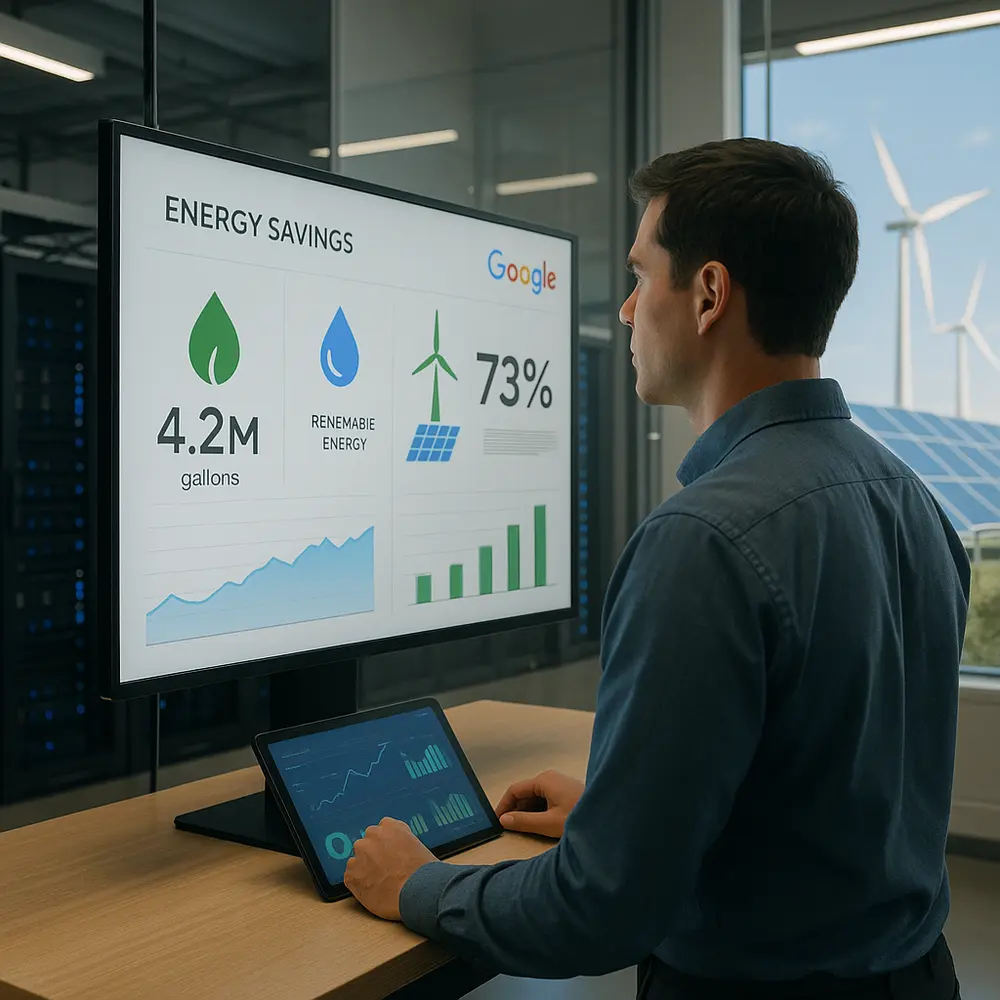
Google has been able to reduce emissions at its data centers by using cleaner energy and making systems more efficient. In 2024 alone, emissions from data centers dropped by 12%. However, as demand for AI grows, emissions from other sources have also increased.
Beyond its own operations, Google’s AI tools have helped users save around 26 million tons of carbon emissions mainly by suggesting more efficient routes, reducing energy waste, and offering clean technology tools.
2. Managing Water Use
AI also helps Google handle water usage more responsibly. In 2024, Google used over 8 billion gallons of water for cooling systems. While that’s a large number, Google has committed to giving back 120% of the water it uses through local water projects by 2030.
3. Facing Real Challenges
Even with all these tools, Google still has some tough challenges. Reports show that emissions have risen by more than 50% since 2019 due to AI related energy demands. Critics also point out that Google doesn’t always share detailed information about the energy and water used by its AI tools, which makes it hard for outsiders to verify progress.
How AI Powered Reporting Helps?

The benefits of using AI for environmental reports include:
- Saving time: Reports that once took months can now be drafted much faster.
- Better accuracy: Less chance of human error when data is handled automatically.
- Clearer insights: AI highlights problems and opportunities more easily.
- Improved communication: AI generated visuals and summaries make reports easier to understand.
- Easier compliance: Reports meet legal and industry standards without added work.
What Could Be Improved?
Despite these benefits, there are areas that still need attention:
- High energy use: AI needs a lot of electricity, which can harm the environment if it comes from fossil fuels.
- Transparency: More detailed public data would help people understand the full environmental cost of AI.
- Supply chain issues: It’s still hard to track and reduce emissions from the global suppliers that companies depend on.
- Rapid growth: As AI tools spread, it’s important to make sure they don’t cause more harm than good.
Looking Ahead: Google’s Green Plans
1. Aiming for Net Zero by 2030
Google has set a big goal: by 2030, it wants to remove as much carbon as it produces across all operations. This includes using only clean energy 24/7 and reducing emissions across its entire supply chain.
2. Building Cleaner AI
AI itself can help reduce its own impact. Google is designing more efficient chips and cooling systems. It’s also testing new energy sources like geothermal and advanced nuclear power. These efforts aim to support AI growth without increasing pollution.
3. Helping Other Businesses Go Green
By offering tools like ESG Book, LEO, and Watershed, Google is helping other companies report their sustainability progress too. This creates a ripple effect, as more businesses get involved in environmental reporting.
4. Supporting Global Standards
Google shares its own progress through yearly reports and works with global organizations to create better ways to track and report environmental data. This helps other companies follow best practices and raise their standards.
FAQs
1. What is sustainability reporting?
Sustainability reporting is when a company shares information about how it affects the environment. This includes energy use, water use, carbon emissions, and efforts to go green. Reports often follow rules and standards to help investors, customers, and governments understand a company’s impact.
2. How does Google AI help with sustainability reporting?
Google AI helps by collecting and organizing data, finding patterns, and even writing parts of the report. It saves time, improves accuracy, and makes it easier to meet environmental reporting standards.
3. Can small businesses use Google’s AI tools for sustainability?
Yes. Through Google Cloud partners like Watershed and ESG Book, businesses of all sizes can access tools that use AI to measure emissions, track progress, and create clear reports.
Final Thoughts
Google’s AI is playing a key role in how companies and cities track their environmental impact. By making sustainability reporting easier, faster, and smarter, AI allows organizations to focus more on real action and less on paperwork. Google is also using AI to cut its own emissions, conserve water, and support clean energy solutions. Even though there are challenges such as rising AI energy use and data transparency Google continues to work on improving both its tools and its impact. With clear goals and powerful technology, AI powered sustainability reporting could be a game changer in the global fight against climate change. If you’re a business looking to improve your environmental practices, using AI tools like the ones developed with Google Cloud might be a smart place to start. They can save time, offer real insights, and help create a cleaner, more sustainable world.