

Table of Contents
- Build a Strong Word Foundation
- Practice with Daily Word Lists
- Break Words into Syllables
- Use Spelling Mnemonics
- Learn Common Spelling Rules
- Use Flashcards and Apps
- Write Often and Proofread
- Play Word Games to Stay Sharp
- Learn Homophones and Confusing Pairs
- Create a Personal Spelling Notebook
- Get Feedback from Others
Strong spelling skills help improve writing, reading, and confidence. Whether you’re a student, teacher, parent, or professional, learning how to achieve spelling mastery can boost your communication.
Build a Strong Word Foundation
Every strong spellcaster starts with the basics. A rich vocabulary gives you a better chance at learning correct spelling naturally.
Ways to build your word base:
- Read books, magazines, or articles daily.
- Keep a notebook of new or tricky words.
- Learn word families like act, active, and activity.
- Understand root words, prefixes, and suffixes.
Reading exposes you to words often, and seeing them in use helps lock in the correct spelling. When you come across unfamiliar words, try to guess their meaning before looking them up. This strengthens your word memory.
Another helpful tip is to group similar-sounding words. For example, learn compliment and complement together.
Practice with Daily Word Lists
Daily practice makes a big difference. Use word lists suited to your level and increase difficulty slowly.
How to organize word lists:
- Start with 5–10 new words per day.
- Write each word 3 times while saying it out loud.
- Use each word in a sentence to understand its meaning.
- Review old lists once a week to refresh your memory.
To stay motivated, challenge yourself with weekly mini-tests. Check your accuracy and track progress. You can even record yourself spelling the words out loud—it’s great for auditory learners.
Involve your environment, too. Label household items like the refrigerator, microwave, or mirror. Repetition through daily interaction reinforces correct spelling naturally.
Break Words into Syllables
Breaking long words into parts makes spelling easier.
For example:
- Unbelievable → Un / be / liev / a / ble
- This method helps you pronounce and spell each chunk.
Syllable-based spelling tips:
- Clap for each syllable while saying the word.
- Spell each part one by one, then write it whole.
- Practice with multi-syllable words like necessary, responsibility, and comfortable.
Try to write syllable patterns in a color-coded format. Use one color per syllable to help with visual memory.
Another tip is to compare similar-structured words. For example, look at responsibility and possibility. You’ll notice the ility ending is shared—recognizing these patterns makes future spelling easier.
Use Spelling Mnemonics
Mnemonics are fun memory tricks to remember tough spellings.
Examples of popular mnemonics:
- Because = Big Elephants Can Always Understand Small Elephants
- Necessary = 1 Collar and 2 Sleeves (1 “c”, 2 “s”)
- Rhythm = Rhythm Helps Your Two Hips Move
These little tools work wonders, especially for visual or creative learners. Try making your mnemonics based on your interests. For example, if you like animals, create animal-based memory clues.
Involving humor and personal references boosts memory retention. The sillier the mnemonic, the more likely you’ll remember it!
Learn Common Spelling Rules
English has many spelling rules that help when guessing spellings.
Key spelling rules to remember:
- I before E except after C: believe, receive
- Drop the final ‘e’ when adding -ing: make → making
- Double the final consonant when adding -ed or -ing (if the word ends in CVC): run → running
Other helpful rules include:
- Words ending in y often change to -ies in plural: baby → babies
- Silent letters often appear at the start or end: knife, honest, debt
Learning rules won’t solve every spelling challenge, but they give you strong guidance to work from.
Use Flashcards and Apps
Technology and flashcards make learning fun. Both kids and adults enjoy spelling practice with interactive tools.
Smart spelling tools to try:
- Quizlet – create custom flashcards
- SpellingCity – games and quizzes for students
- Grammarly – checks spelling in your writing
- Word Club (Scripps) – from the National Spelling Bee
Flashcards also help with repetition. Try the old-school method by writing words on cards and flipping through them daily.
Take it one step further, use the Leitner System, where difficult words are reviewed more often, and easier words less frequently. This spaced repetition system improves long-term retention.
Apps that offer leaderboards or progress badges can also add fun and motivation, especially for children.
Write Often and Proofread
Spelling improves when you write regularly and review your work.
Tips for writing practice:
- Keep a daily journal or diary.
- Write short stories or descriptions.
- Try spelling dictation: listen and write what you hear.
After writing, always re-read and check for mistakes. This helps you spot your weak areas.
Reading your work aloud helps catch spelling mistakes you might not see visually. You can also use tools like text-to-speech to hear how your writing sounds. Misspelled words often stand out when read back to you.
Play Word Games to Stay Sharp
Games train your brain to think fast and improve spelling naturally.
Best spelling games to play:
- Scrabble – form words and score points
- Boggle – find hidden words in letter grids
- Wordle – guess the daily five-letter word
- Hangman – guess letters and save the stick figure
These games build vocabulary and spelling skills without feeling like work.
Try setting weekend word game challenges with friends or family. Competitive fun encourages faster learning and strengthens recall under pressure.
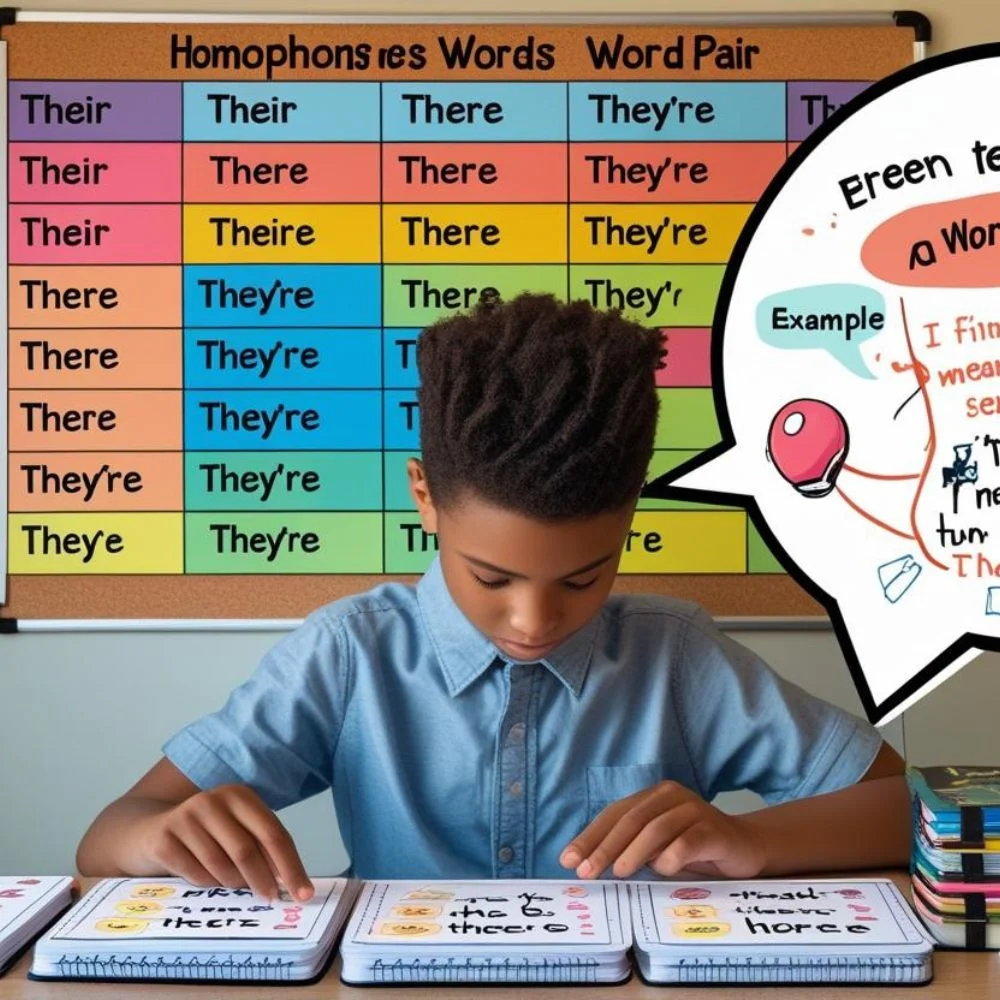
Learn Homophones and Confusing Pairs
Homophones sound the same but are spelled differently.
Examples:
- Their / there / they’re
- Your / you’re
- To / too / two
Tips to remember tricky pairs:
- Use pictures or sentences to show differences.
- Write your example sentences.
- Make a chart of common confusing words.
Many spelling mistakes happen due to homophone confusion. Creating flashcards with both word meanings on the back helps you link sound to spelling and usage.
 Create a Personal Spelling Notebook
A personal spelling notebook is a powerful tool to track your growth.
What to include in your notebook:
- New words you learn each week
- Words you miss often or find hard
- Mnemonics or notes to remember
- Weekly spelling test results
You can even decorate your notebook to make it more fun to use. A personalized book increases your emotional connection to learning.
Add sections like Top 10 Hard Words of the Month or Words I Mastered This Week to stay motivated and see your improvement.
Get Feedback from Others
Learning is faster with support. Share your writing with friends, teachers, or family.
Benefits of feedback:
- Others spot mistakes you miss
- You get advice on confusing spellings
- Feedback motivates regular practice
Join a spelling group, club, or online forum. Being part of a spelling community builds confidence and encourages you to keep learning.
Even peer editing at school or online can teach you spelling in context. Reviewing someone else’s work sharpens your spelling eye.